
Maverick County Busted Mugshots and Booking
Every busted mugshot in Maverick County starts the same way. An agency arrests someone and hands them to county custody. A booking file opens from there. The Sheriff's Office runs the jail, which local reporting usually calls the Tom Bowles Detention Center. You'll also see it shortened to TBDC on the Sheriff's own staff page. One file can hold plenty. Expect a booking number, charge text, a bond amount, and a court reference. Release or transfer details may appear too. A photo shows up if one exists and can legally leave the building.
Labels on a record answer different questions. A person might be freshly booked, held, released, or moved elsewhere. None of that tells you where a case stands today. For that, call the jail. Let the clerk's file settle the outcome.
Maverick County Booking Record Fields
Don't expect a public roster here. The county site posts no booking screen and no list of fields, so anyone hunting Maverick County arrest records has to ask. Start with the Sheriff or the county records custodian. Find out which fields are actually public, whether a record lives in the jail's management system or an arrest-report system, and whether a photo counts as its own separate item. One more thing worth knowing: a booking number and a court cause number are two different identifiers. Request both when you have them.
| Field to request | What it can establish |
|---|---|
| Name, alias, and intake number | How the person was entered and the identifier used for the jail record. |
| Arrest and intake dates | Whether an arrest date differs from the time of county jail processing. |
| Arresting agency and charge text | Which agency made the arrest and how charges were entered at booking. |
| Bond and magistrate action | A release condition or amount, not a punishment or final case result. |
| Release or transfer status | Whether county custody ended and, if maintained, the recorded date or destination. |
| Photograph and court reference | Whether a releasable image exists and how to follow the matter in court. |
Some of what the county holds stays confidential or gets redacted before release. Keep your ask simple. Request an existing record by full name, booking number, or a date range rather than asking a custodian to write a new report or explain a charge. Narrow requests have another benefit too. They prevent mix-ups between people who share a name, and they stop an old entry from being mistaken for current custody.
- Booking
- Jail intake processing after an arrest or transfer.
- Bond
- A condition or amount connected to release, not a final penalty.
- Arraignment
- A court stage where the case and rights are addressed under the court’s procedure.
- Disposition
- The recorded outcome of a case, such as dismissal, acquittal, plea, or sentence.
- Expunction
- A court-controlled process that may require eligible records to be removed or destroyed under Texas law.
Maverick County Busted Record Requests
Maverick County works through two channels. Phone calls handle who is in custody right now. Written requests handle existing records. The county's Open Records page routes written requests to openrecords@co.maverick.tx.us under the Texas Public Information Act. Fees and timing are unsettled ground. The county publishes no fixed mugshot fee. It promises no turnaround window either. So a precise, narrow request is your best tool. It gives the custodian something concrete to search for and a clear basis for explaining anything lawfully withheld.
- Identify the person with a full name, a booking number if known, and a narrow date range. State whether the request concerns a booking record, jail register, arrest report, photograph, or release record.
- Ask for the existing electronic format, the name of the record custodian, and a cost estimate before charges are incurred. Ask the county to identify any withheld or redacted portion and its legal basis.
- For an Eagle Pass arrest report, ask Eagle Pass Police Records whether it holds that report. For present jail status, call the Sheriff rather than assuming a report confirms custody.
- Keep the request and response. If a court outcome is needed, take the booking or cause identifier to the proper clerk rather than treating the booking response as the final record.
Texas law puts a clock on the county. Under the Texas Attorney General's rules, a governmental body must respond promptly and generally take action within ten business days: release the records, give an expected date, ask the AG for a ruling, or state that nothing responsive exists. Review and redaction can stretch that out. Photos are a separate question, since an applicable exception can limit or block their release.
Think about which channel fits your need. A phone call to the Sheriff answers a time-sensitive custody question when public information can be confirmed. The written Open Records route produces a documented copy of an existing record. The official Sheriff profile is the contact source for the office and its jail responsibility.
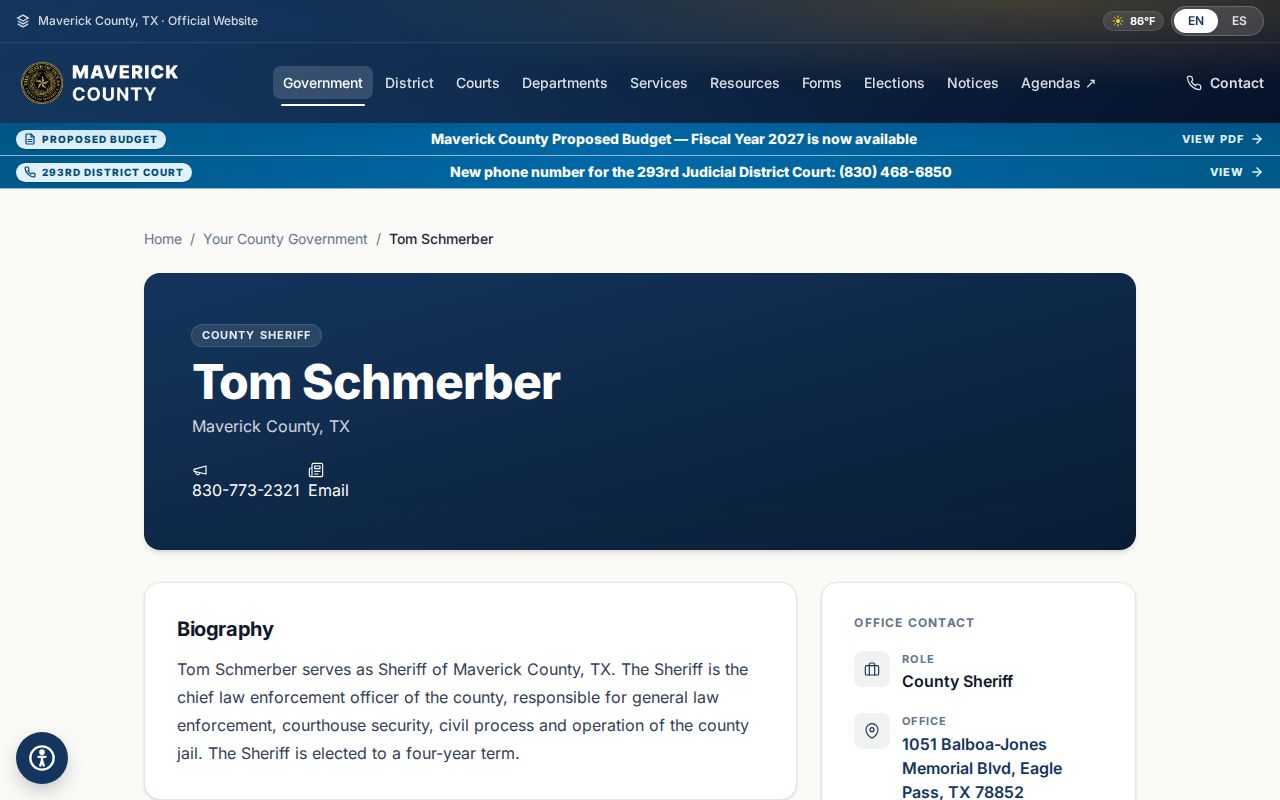
That profile describes a contact-based route, not a booking-photo search you can run yourself. Use the office line for current custody questions, and save the written request for records.
Maverick County Mugshot Law and Correction
Texas Government Code Chapter 552 anchors every public-information request in Maverick County. The law opens a wide door to government-held information. It still shields confidential material and honors specific law-enforcement exceptions. The practical move is simple. Name a specific existing record, then read what comes back. Expect a booking file to mix public pages with protected ones. The Texas Public Information Act source is the statewide starting point for the county's request path.
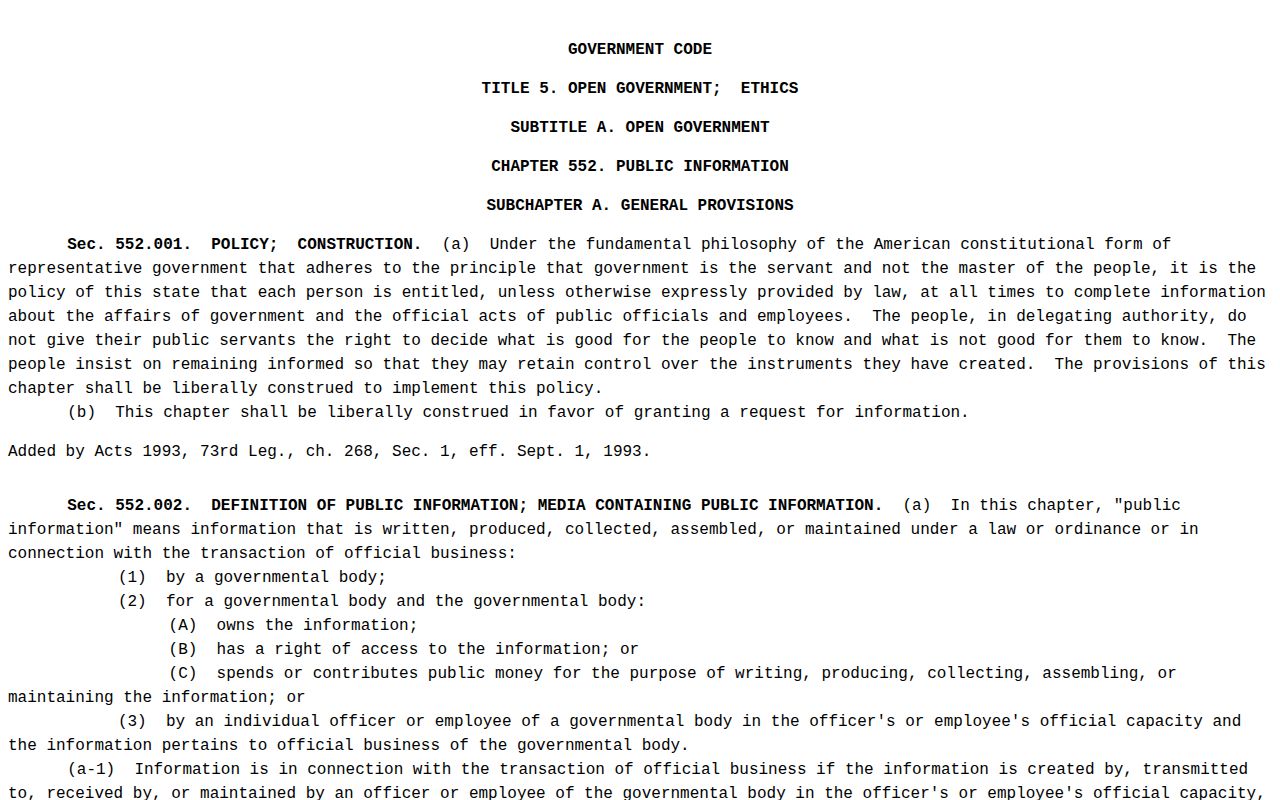
The statute frames the request. It does not build a public roster out of the county's phone-and-paper route, and it does not guarantee that every field in a file goes out the door.
Texas Business & Commerce Code Chapter 109 covers how certain businesses publish criminal-record information. It sets out accuracy and correction procedures, bars payment-conditioned changes, protects juvenile material, and addresses records touched by expunction or nondisclosure. It is not a blanket ban on booking photos or news coverage. How it applies depends on the publisher and the record, so a release from jail promises nothing about deletion.
Fixing a wrong record starts with paper. Get the court or agency document first, whether it corrects an error or changes the record's status through a qualifying order. Then send a clear, documented request to the official custodian and to any publisher's stated correction channel, and keep proof of everything you sent. Mugshots.com keeps an unofficial Maverick County page that may be stale, and its own record-maintenance process is publisher policy, not legal advice. Never pay anyone to correct an arrest record.
For expunction, the governing law is Code of Criminal Procedure Chapter 55A. A nondisclosure order works differently than an expunction, so read both against the current court materials. Juvenile and confidential material stays outside any public-record conversation. Note: An order, a dismissal, and a search-result update each carry different effects and are not interchangeable.
Find Maverick County Busted Arrest Records
Maverick County has no public roster you can browse. That makes the phone your best tool. Call the Sheriff's Office at 830-773-2321 and ask what public custody status can be confirmed, which agency made the arrest if known, and which office holds the record you want. A deputy can sort a current county hold from a past arrest, something no web search can do. Don't expect a photo over the phone. And a name that shows up empty online tells you nothing about whether an arrest happened.
- For current county custody, contact the Sheriff and record the date of the inquiry. Ask whether the person is in custody, released, transferred, or not found in the information the office can release.
- For an Eagle Pass event, contact the city Police Records channel for an existing incident or arrest report. The city record and a county jail record can be different files.
- Send a specific county Open Records request for historical booking material, a jail-register entry, or a photograph if one is maintained and releasable.
- Use the appropriate clerk for a cause number and disposition. If custody moved beyond the county, use the state, federal, or immigration system that matches the confirmed authority.
Treat any search hit, news story, or old archive as a lead rather than proof. When the law allows, match more than one identifier, such as a full name plus a booking date. Two people can share a name. Never merge entries on name alone. For warrant questions, the county's Most Wanted page explains how to seek official warrant-status confirmation instead of trusting an unverified list.
| Channel | Custody or record scope | Photo status and access |
|---|---|---|
| Sheriff telephone | Current public county-custody information | No online photo search verified; ask which custodian holds an existing image. |
| County Open Records | Existing booking, register, release, or other county records | A photograph may be requested if maintained and releasable. |
| Eagle Pass Police Records | City incident and arrest-report records | Does not promise that an incident report contains a booking photo. |
| TDCJ offender search | State-custody records after applicable transfer or intake | No public county-booking-photo field was verified. |
| Local news and historical archives | Selective or older reporting only | Unofficial, incomplete, and not proof of present custody. |
Maverick County Roster Requests
The Maverick County website offers no official inmate search. There is no jail roster, booking feed, or photo-lookup tool either. So there are no search fields, update schedules, or photo policies to describe. That gap is just a local fact. It is not a reason to lean on a third-party list. Call the Sheriff for current status. For older records, ask the county for the specific record series you need.
Make each request item-specific. A jail register, a booking record, a booking-in or booking-out form, an arrest report, or a booking photograph are all separate items. A strong jail-register request names a person or a narrow date range. Add an intake number, the reason for commitment as recorded, and any release or transfer date. The custodian can tell you which system holds the file and what gets redacted. Not every field is public. An image may never have been created at all.
| Request element | Why it helps |
|---|---|
| Full name and date range | Limits a search when no public roster query exists. |
| Booking or intake number | Separates a jail record from a court cause number. |
| Custody state as of the response | Prevents a past booking from being described as a current hold. |
| Record series and format | Lets the county locate the register, booking form, report, or image system. |
| Cost-estimate request | Lets the requester decide before chargeable copying or extraction begins. |
Two county-named guide sites also report no official countywide roster. They are not official sources, though. The Sheriff and the county's Open Records channels remain the real verification route. Note: A roster, if one appears later, would capture only one point in time and would not replace the court's disposition.
Maverick County Busted Booking Windows
No verified official booking feed exists here. Not same-day, weekly, or monthly. In the first 24 hours, intake, magistrate review, data entry, and release can all run on their own clocks, so a missing web result proves nothing. Call the Sheriff for current status, and pin down the exact date when you request a record.
The same limit applies after a few days. No delayed feed or rolling archive was verified either. Eagle Pass Police says older reports take at least a week to retrieve, but that concerns report retrieval, not a jail feed or photo window. For spans of 31 days or more, request the jail register, incarceration record, arrest report, or court record for a narrow range. Don't call a historical archive a live record.
Mugshots.com does host a county-local historical archive with older entries, but it is not a current feed. RecentlyBooked, Texas Arrests.org, Mugshots.zone, and Busted Newspaper showed no verified Maverick County section. Never guess a local URL or assume a statewide hit belongs to this county. The Maverick County crime-news resources frame local reporting as a news lead, not a full booking log.
Maverick County Arrest Alerts and Records
No verified Sheriff app or booking-alert subscription covers jail photos, inmate status, or release notices here. Eagle Pass does offer an official Citizen Observer app. It handles anonymous tips, agency alerts, and agency web or social content. The Eagle Pass Alert Center adds categories, archives, Notify Me, and RSS. Neither tool is a booking feed.
An alert can describe an incident without confirming an arrest. It may not confirm custody, a charge, or an outcome either. Official social posts can sometimes be requested as records when the agency keeps them for that purpose. Still, a post can be corrected or deleted while the real file sits with another custodian. Use the alert tools for city notices. Go back to the Sheriff, Police Records, or the court clerk for anything tied to a specific person.
Maverick County Busted Court Follow-Up
After a booking, the court record takes over the timeline. The county's District Court page lists the 293rd and 365th District Courts. Felony criminal matters land there, among other duties. The 293rd District Court provides a record-search entry point plus clerk contact details. Texas has no single statewide trial-court portal. Match the court and clerk to the case type.
Eagle Pass Municipal Court handles city matters on its published schedule. A docket entry may show a defendant, a docket number, a charge, the police department, and a status. That is not a county jail roster. District cause numbers, municipal docket numbers, booking numbers, and TDCJ identifiers do not interchange. When a record is not online, ask the right clerk for a copy, and use the court's own terms for dismissal, acquittal, plea, deferred adjudication, conviction, or sentence.
Question: Does a booking record show the final result? Answer: No. The legal disposition lives in the court record, not a news item or a jail entry, and charges can change as a case proceeds.
Maverick County Custody Beyond Booking
County custody is only the first stop for some people. Someone who leaves the Maverick County jail may have moved to a state prison, a federal facility, an immigration hold, or simply gone home. Each system keeps its own records. None of them doubles as a county booking feed. The Texas Department of Criminal Justice offender search covers people held in state custody, not freshly booked county detainees. Its results focus on identity, location, offenses, and projected release dates. No county booking photo appears there, so a state identification image should never be passed off as one.
Federal and immigration locators have their own boundaries. The Bureau of Prisons locator reaches current federal inmates and some older records. The U.S. Marshals Service rarely releases photographs of federal prisoners at all. The ICE Online Detainee Locator tracks current or recent immigration custody, but its timing limits apply.
Keep these systems separate in your mind. A person vanishing from a county search proves a transfer, not a release. Local reports have mentioned a possible arrangement between the Sheriff and ICE. No official county contract confirms it, so it tells you nothing about any individual's custody.
Maverick County Busted City Records
Eagle Pass is the county seat and the only incorporated city in Maverick County. That fact shapes how busted records work here. An Eagle Pass Police arrest can land a person in county custody. A Sheriff arrest from an unincorporated stretch can arrive at the same detention center. Even then, the arresting agency and the record-keeping office may be two different entities. The city's Eagle Pass Busted Mugshots page sorts Police Records, county jail status, city alerts, and local coverage into their own lanes rather than pretending a city feed exists.
El Indio, Quemado, and Normandy are named communities, not incorporated cities with police departments. Their arrest and custody questions belong to the county or to whichever agency made the arrest. One real city, one city record structure. That matches the local government map. It also keeps a city keyword from being mistaken for proof of where a booking record lives.
Maverick County Jail Record Retention
A record that disappears from the web has not necessarily been destroyed. Texas sets the rules through the State Library and Archives Commission's Local Schedule PS. County jail registers sit under PS4200-06a as permanent. The register is a summary for each person committed. It holds at least the name and gender, an intake number, the reason for confinement, and a release or transfer date. Nothing in the schedule forces Maverick County to publish it online.
Other jail material follows different clocks. Prisoner incarceration records cover booking-in, booking-out, transfer, and release. They must be kept at least two years past the release or transfer date under PS4200-10. Video and audio sit on their own schedule entirely. A booking photo might live inside the register, an incarceration file, an investigation record, or a standalone image system. Ask the county directly how it classifies the photo, which schedule governs it, and whether a hold or court order stretches the window.
Question: Can you still request an old booking once it drops off the internet? Answer: Quite possibly. Name the record series, give the date, and ask whether it sits with the county, moved elsewhere, or was disposed of under the adopted schedule.
Maverick County Busted Jail Oversight
Oversight records are not booking records. Still, they tell an institutional story worth reading. A September 2022 Texas Commission on Jail Standards notice documents a historical noncompliance finding at the county lockup. It says nothing about conditions today, and nothing about any individual detainee. For anything current, request the newer inspection or correction material straight from the responsible agency before drawing conclusions.
Whatever the record, keep the inquiry narrow. Pin down the record type, the agency, the date range, and the custody status. That approach beats any gallery or unverified aggregator. It also keeps a jail's official response distinct from what a courtroom later decides.